
Building a Headless Commerce Platform That Turns Browsers Into Buyers
Norde, a direct-to-consumer home and lifestyle brand with growing online revenue, had outgrown its monolithic eCommerce platform. The existing setup could not support interactive product customisation, editorial-to-purchase flows, or performant mobile shopping. With mobile traffic accounting for over 65 % of sessions and average order values stalling, Norde engaged Advantrix Labs to rebuild its digital storefront on a headless, composable architecture designed for conversion and scalability.
Project Snapshot
Client profile
Norde is a mid-market direct-to-consumer brand selling modular furniture and home decor. The company built a loyal following through distinctive Scandinavian-inspired design and strong social-media presence. Annual online revenue sat in the $5M–$15M range, with a product catalog of several thousand SKUs including configurable items. Before engaging Advantrix Labs, Norde operated on a monolithic commerce platform that limited frontend flexibility, slowed page performance, and could not support the interactive product experiences the brand needed to stand out.
Project goal
Design and launch a headless commerce platform with a composable frontend that delivers the following.
- Provides an interactive product configurator that lets shoppers customise materials, colours, and dimensions with real-time visual previews, reducing pre-purchase uncertainty and boosting average order value
- Unifies editorial content and shopping into one seamless experience, so styling guides and room inspiration link directly to purchase flows
- Achieves significant performance improvements through decoupled architecture, edge caching, and optimised media delivery — directly improving mobile conversion where the majority of traffic comes from
- Supports multi-channel product distribution from a single backend, feeding web, mobile, and marketplace channels without duplicating catalog management
- Delivers advanced search and filtering with instant results across a large, variant-heavy catalog
Business challenge
Norde faced several barriers to scaling its D2C business beyond the $10M mark.
- Platform rigidity: The monolithic commerce system forced template constraints that prevented Norde from building differentiated shopping experiences. Every customisation required workarounds, and frontend changes risked breaking backend functionality
- No product configurator: Modular furniture with multiple material, colour, and size options could not be presented interactively. Shoppers had to read text descriptions and imagine combinations, leading to high return rates and low confidence at checkout
- Content-commerce disconnect: Editorial content — room styling guides, designer interviews, trend collections — lived on a separate CMS with no direct link to products. Engaged readers had to leave content to find and buy featured items, breaking the purchase momentum
- Mobile performance decay: As the catalog grew, page load times on mobile devices got steadily worse. With over 65 % of traffic coming from mobile, slow performance translated directly into lost revenue. Studies show that a one-second delay in mobile load time can reduce conversion by up to 20 %
- Manual multi-channel management: Product data for marketplace listings and wholesale feeds was exported and maintained by hand, causing inventory mismatches and delayed updates
Solution
Working closely with Norde, Advantrix Labs designed and built a headless commerce platform that decouples the frontend experience from the commerce backend, enabling rapid iteration and rich interactive features.
- Composable, headless architecture: A decoupled frontend communicates with commerce services through a unified API layer. This separation lets the team update the shopping experience independently from backend logic, enabling faster feature releases and A/B testing without deployment risk
- Interactive product configurator: Shoppers select materials, colours, and dimensions for modular products with real-time visual updates. The configurator shows pricing changes instantly and generates shareable configuration links, turning customisation into a discovery and social-sharing tool
- Unified content-commerce engine: Editorial pages, styling guides, and collection stories embed shoppable product cards directly in the content. Readers move from inspiration to cart without navigating away, closing the gap between content engagement and purchase
- Performance-optimised frontend: Server-side rendering, edge caching, and modern image optimisation deliver sub-second page loads on mobile. The composable architecture avoids the frontend bloat typical of monolithic platforms, keeping the shopping experience fast as the catalog scales
- Advanced search with variant awareness: Search and filtering account for configurable variants — shoppers filter by material, colour family, or size availability across the full catalog. Autocomplete and instant results provide an app-like browsing experience
- Multi-channel product feeds: A single product catalog serves web, mobile, and marketplace channels through normalised API endpoints. Inventory, pricing, and product data stay synchronised across channels without manual exports
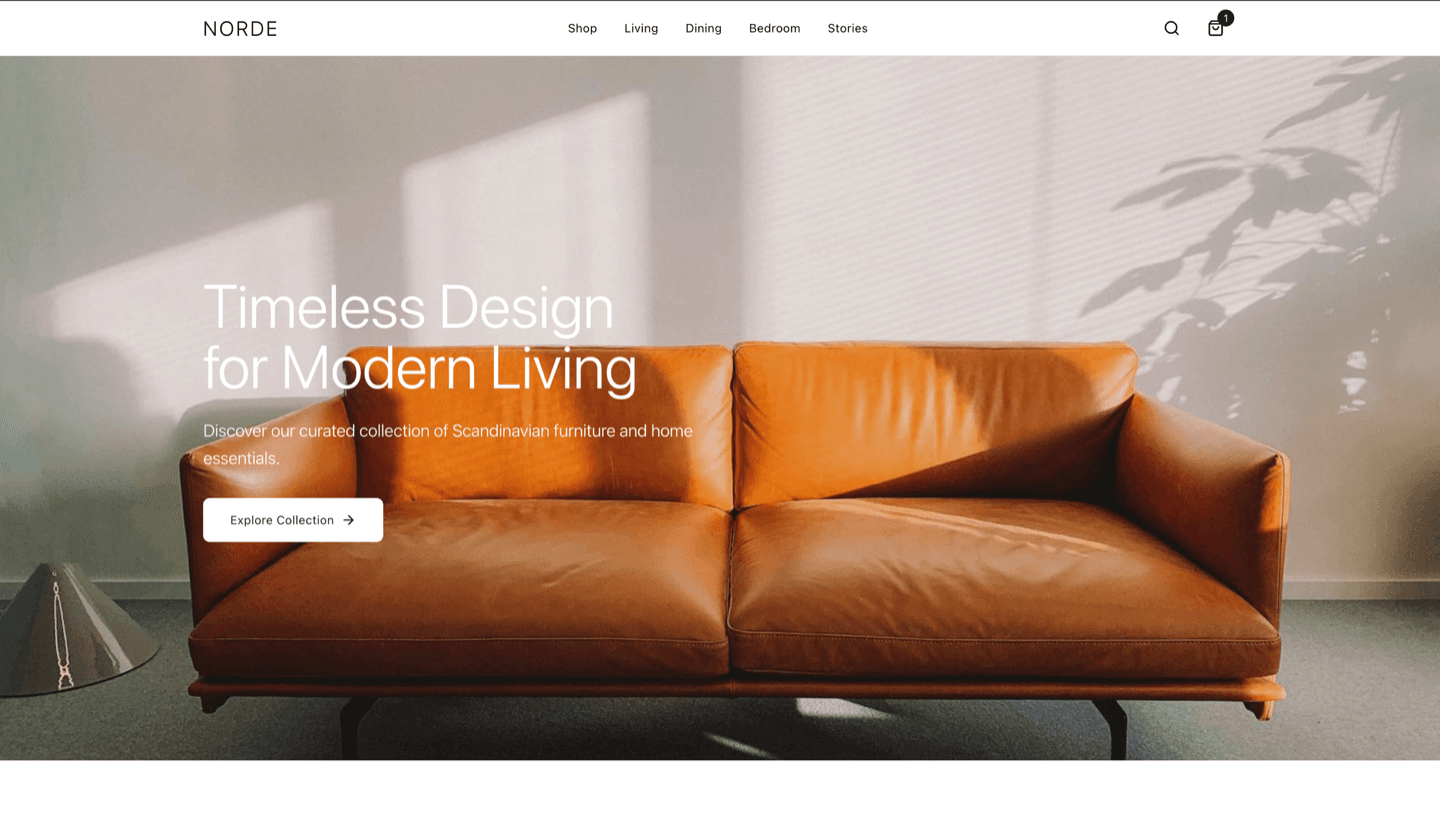
Solution gallery
Product and workflow visuals from the delivered solution.
Business outcomes
By rebuilding on a headless architecture, Advantrix Labs helped Norde break through its growth plateau with measurable improvements across conversion, order value, and operational efficiency.
- 35 % improvement in mobile conversion rate: faster page loads and an optimised mobile configurator experience reduced bounce rates and guided more mobile shoppers to checkout
- 40 % increase in average order value: the interactive product configurator encouraged shoppers to explore premium materials and add complementary items, lifting basket size
- 50 % faster page load times: decoupled architecture with edge caching and optimised media delivery cut median mobile load times from 4.2 s to 2.1 s
- 3x increase in content-driven revenue: shoppable editorial content converted readers into buyers at three times the rate of the previous disconnected content-to-store path
- 25 % reduction in product returns: visual configurator previews reduced uncertainty about material, colour, and sizing choices, lowering return rates on configured products
- 80 % reduction in multi-channel catalog maintenance: automated product feeds replaced manual exports, eliminating inventory mismatches and freeing the merchandising team for strategic work